
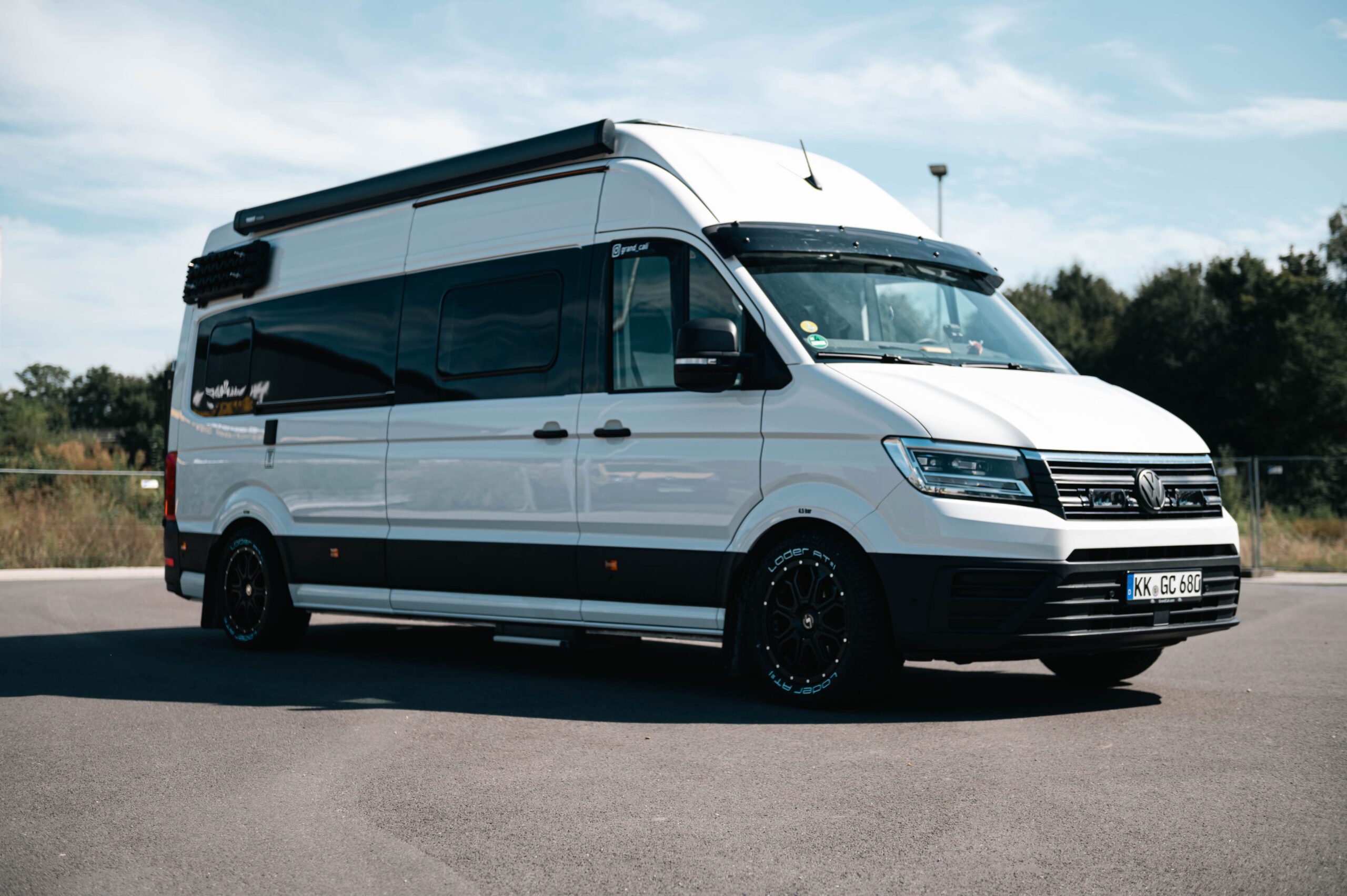
A few months ago, there were initial reports that the GRP roofs of the Grand California will be emitting hazardous substances ex works until 2022.
Last but not least, ZDF reported on the case in a detailed report on Frontal 21.
According to internal VW documents available to ZDF, it was already established in 2021 that under certain conditions the concentration of volatile organic compounds in the interior is well above recommended guide values. The substance in question is styrene – a solvent used in the processing of glass fiber reinforced plastic (GRP).
Particularly critical: VW itself has spoken of “harmful concentrations” in an internal test report if the vehicle is used over a longer period of time. The Federal Environment Agency classifies styrene as “possibly carcinogenic”. Young children in particular are considered a risk group because they are more sensitive to such pollutants.
Even though VW now speaks of a “past problem” and refers to changed production processes since mid-2022, the question remains as to how the affected vehicles will be dealt with – because there has been no recall campaign to date.
Our Grand California was built in exactly the same period, and we also noticed what we thought at the time was the typical new car smell. However, the problem resolved itself over time. As we know today, the roof is now completely fumigated. Of course, I can’t say at this point whether we have suffered any health problems as a result. Even if we weren’t in good health, who is to say that it was ultimately down to the roof of our Grand California?
And now?
But what does this mean for customers? Should they take Volkswagen to court? I can say from experience: being right and being proven right are two different things. In Germany, VW will certainly not be held accountable. You should bear this in mind: After all, the state of Lower Saxony holds 20 percent of VW shares and also has a right of veto on important decisions under the VW Act.
So I would like to say: Who slaps the hand that feeds you? I don’t expect there to be any consequences – neither at management level nor for the benefit of consumers.
Actually, VWN should take back all affected Grand California and refund the full purchase price to customers without any ifs and buts. And we’re not even talking about possible compensation. But let’s not kid ourselves: Neither will happen – and for several reasons.
- The vehicles in question are now too old, the roofs have been vaporized and the values are all within the normal range.
- Even if you want to receive compensation as a customer, you have to do one thing above all: have suffered damage – and be able to prove it. I’m not a lawyer, but I know from my own experience that this is de facto impossible.
Volkswagen will therefore come out of this story unscathed, at least financially. But what is once again much worse is the damage to the company’s image. After trust in the Group was already completely shaken following the diesel scandal, this is now the next major blow to the former German flagship company.
The arrogance with which VWN and its management act is almost unprecedented. The GRP roofs are the least of the problems. I can only mention defective roof seams or toilet flaps through which water penetrates into the vehicles. Here, too, the customer has lost out as soon as the vehicle is no longer under warranty. These things are also clear production defects and would of course have to be dealt with at VWN’s expense – regardless of whether the vehicle is still under warranty or not.
This arrogance runs through the entire Group. Whether it’s people who don’t want to let us onto the stand because we write a small blog and VWN doesn’t like what we do. Or workshops that always shift the blame onto the customer.
There is a saying: The fish stinks from the head.
The Grand California could be such a great camper – if the Group had the courage to admit problems and solve them, and not at the expense of customers.
Please don’t go crazy if you have a Cali from the affected model years. You can now rest assured: The roofs are no longer harmful to health – at least according to the ZDF tests.

